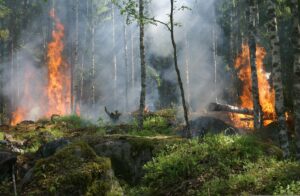
Every September 7th, the world marks the International Day of Clean Air for Blue Skies as a momentum to raise awareness regarding the importance of clean air for human health, ecosystems, and sustainable development. Ironically, this year’s commemoration in Indonesia takes place amidst a haze crisis caused by forest and land fires (karhutla) that have once again shrouded several regions, particularly in Kalimantan. Instead of enjoying blue skies, communities in various areas are forced to deal with unhealthy, and even hazardous, air quality.
Deteriorating Air Quality Due to Forest and Land Fires
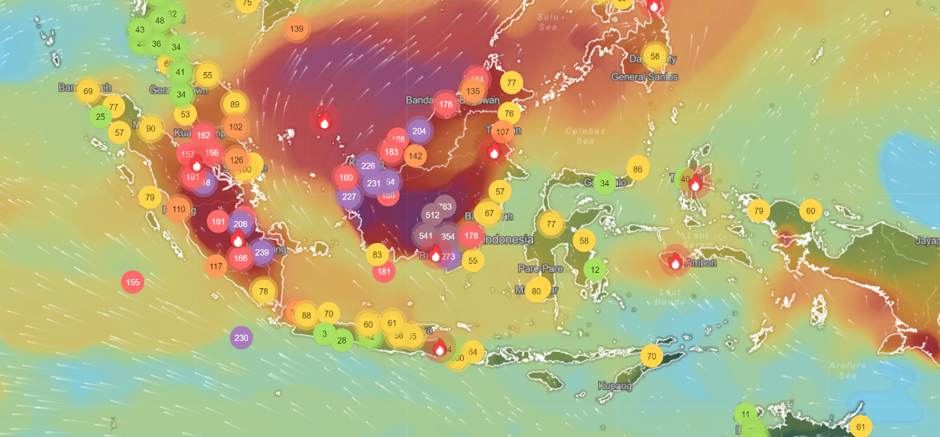

Source: IQAir 05/09/2026
Based on spatial air quality monitoring data from IQAir as of September 5, 2026, regions with high occurrences of forest and land fires exhibit unhealthy to hazardous air quality. As reported by Detik.com, the National Disaster Management Agency (BNPB) disclosed that air quality in several areas of Kalimantan remains at a hazardous level due to ongoing forest and land fires.
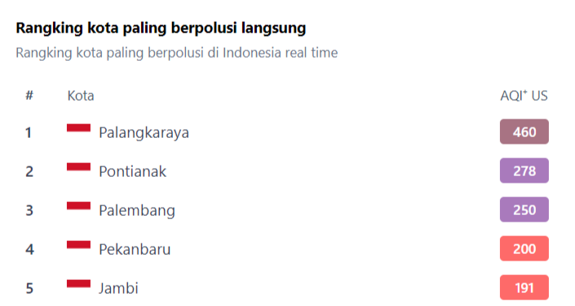
Source: IQAir 05/09/2026
Real-time IQAir data as of September 5, 2026, records Palangkaraya as the city with the worst air quality index in Indonesia, reaching an index value of 460 — a figure classified under the hazardous category. The higher the index value, the greater the air pollution level and the potential adverse health impacts on the public, ranging from acute respiratory disorders to long-term risks for vulnerable groups such as children, the elderly, and individuals with pre-existing respiratory conditions.
Forest Fires and the Environmental Quality Index (IKLH)
These conditions raise a broader question: how do forest and land fires actually affect overall environmental quality, beyond just air quality? One instrument used to answer this question is the Environmental Quality Index (IKLH), which is composed of three main indicators: the Air Quality Index (IKU), the Land Cover Quality Index (IKTL), and the Water Quality Index (IKA). Forest and land fires directly affect these three indicators in a chain reaction. First, during a fire event, large quantities of particulate matter and gaseous pollutant emissions are released into the atmosphere. High concentrations of these pollutants suppress the IKU values in affected regions. Second, the extensive loss of forest and land to fires leaThus, forest and land fires do not merely damage a single environmental aspect; rather, they simultaneously suppress all three foundational pillars of the IKLH — depicting that the impacts of forest fires are systemic and cross-environmental media (air, land, and water).
In the context of formulating these indicators, PT Bhumi Pasa Hijau holds a strategic track record and contribution, particularly in preparing the 2020 and 2021 IKLH documents, which helped strengthen the database and methodology for environmental quality monitoring in Indonesia.ds to massive vegetation cover loss, which negatively impacts the cumulative IKTL score. Third, the loss of vegetation leaves topsoil more vulnerable to erosion during rainfall; ash residue and eroded sediment washed into river bodies increase water turbidity and degrade aquatic physicochemical parameters, ultimately lowering the IKA score.
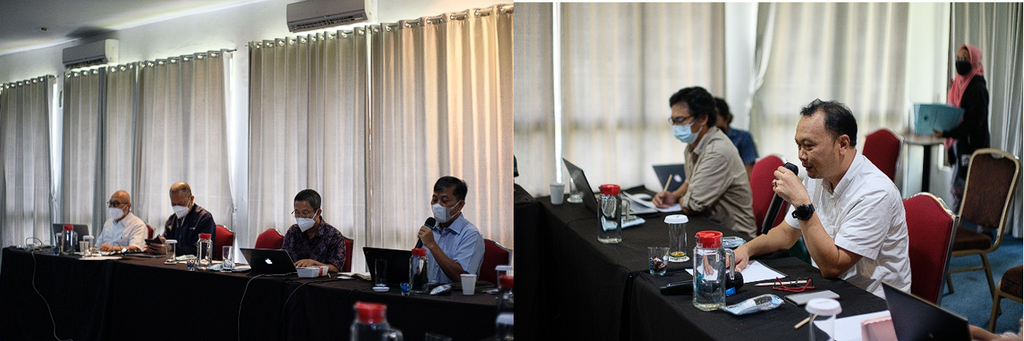
Documentation of bhumi pasa hijau in the preparation of the IKLH document.
A Momentum for Action
This year’s International Day of Clean Air commemoration should serve as both a reminder and a momentum to reinforce collective commitments to preventing and controlling forest and land fires. Prevention efforts, consistent monitoring, and sustainable land management are crucial steps toward mitigating future fire risks — especially amid increasingly uncertain global climate conditions that threaten to prolong dry seasons and heighten fire vulnerability. Without collective and sustained action from the government, the business sector, and society, the vision of providing blue skies and clean air for all Indonesian people will remain continuously delayed by the recurring annual haze.
Reference List:
- Afriandita, Z. P. (2026, 22 Agustus). Apa itu Karhutla? Ini penyebab, dampak, dan cara mencegahnya. RRI.co.id. https://rri.co.id/regional/2672291/apa-itu-karhutla-ini-penyebab-dampak-dan-cara-mencegahnya
- Winarsih, M. (2019, 7 Oktober). Kabut asap berdampak terhadap perekonomian. MMCKalteng. https://mmc.kalteng.go.id/berita/read/8509/kabut-asap-berdampak-terhadap-perekonomian
- BPBD Kabupaten Klaten. (2025, 15 Oktober). Kenali Karhutla: Pahami penyebabnya, cegah dampaknya! https://bpbd.klaten.go.id/kenali-karhutla-pahami-penyebabnya-cegah-dampaknya
- Greenpeace Indonesia. Kebakaran hutan dan lahan. https://www.greenpeace.org/indonesia/kampanye/hutan/kebakaran-hutan-dan-lahan/
- Pantau Gambut. https://pantaugambut.id/pelajari/dampak
- Muliawati, A. (2026, 3 September). Kualitas udara Kalbar masih bahaya, jarak pandang di bawah 1 km. detikNews. https://news.detik.com/berita/d-8646932/kualitas-udara-kalbar-masih-bahaya-jarak-pandang-di-bawah-1-km
- Kementerian Kehutanan. Indikasi luas kebakaran. SiPongi+. https://sipongi.gakkum.kehutanan.go.id/indikasi-luas-kebakaran
- IQAir. Peta kualitas udara interaktif. https://www.iqair.com/id/air-quality-map